A Kontek Guide
The Decision Maker's Guide to Premium AV Implementation
What every leader should know before investing in audiovisual technology — avoiding the costly mistakes most organisations make.
You have a vision for your space — a dream, if you will. Maybe it's a boardroom where every meeting runs without a hitch. Maybe it's a university auditorium where remote and in-person students have an equally rich experience. Maybe it's a command center that cannot go down — not for a minute, not ever.
7 Critical Topics
What every AV decision-maker needs to know
Free Resource
No form required to read
The Line Items Nobody Budgets For
The real cost of getting it wrong
When organizations try to cut corners on AV, the costs rarely show up in the original budget. They show up in the months and years that follow.
Consider a common scenario. A brand-new conference room is installed with lower-tier equipment. On day one, there are failures. Every morning, someone from IT has to come in and reboot the system, troubleshoot a connection, or figure out why the calendar integration dropped. That’s 30 minutes to an hour per room, per day. Multiply that across five, ten, or twenty rooms on a campus and you have an entire team being pulled off their actual responsibilities to babysit technology that should just work.
Then there’s the user side. When people walk into a room and the display won’t turn on or the video call sounds garbled, they lose confidence. They stop using the room. They start scheduling workarounds, bringing their own devices, or worst of all, pulling equipment apart trying to fix things themselves. Every one of those moments is a small failure that compounds into a much larger problem: the technology your organization invested in is no longer serving its purpose.
15–60
min / room / day
IT time consumed troubleshooting unreliable AV systems
90
days
Consumer-grade equipment averages 90 days of warranty coverage. Commercial-grade: 3–5 years. That gap tells you everything about how it's built.
30%
of meeting time
Lost to technology issues in poorly designed AV environments
5–7
years of reliable service
From systems with proper planning, commercial equipment, and expert integration
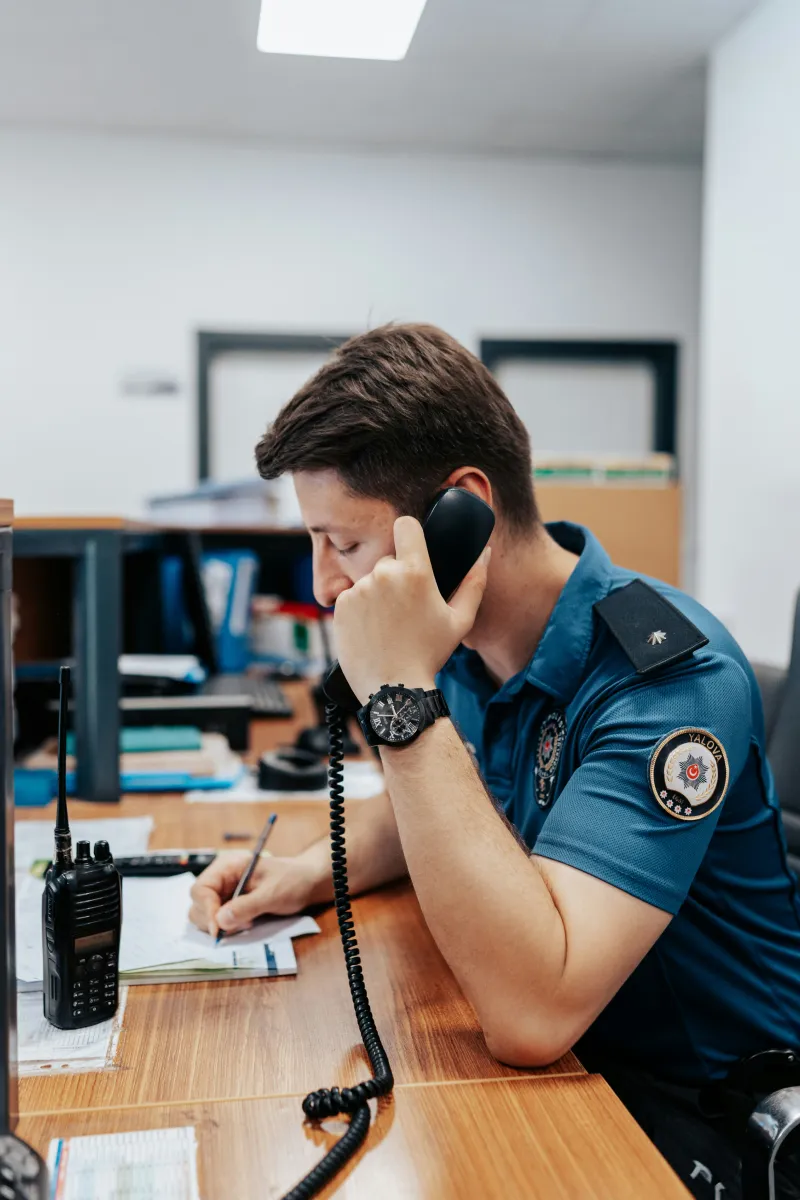
And in some industries, the stakes are far higher than productivity. In healthcare environments, AV systems support critical communication for clinical teams.
In 911 call centers and emergency command centers, a system failure during a weather event or crisis can have consequences that extend well beyond the building. In courtrooms, a single point of failure can disrupt an entire day’s docket.
The severity of impact changes based on the industry, but the root cause is the same: decisions made at the front end of a project ripple through its entire lifecycle.








The online retailer trap
Why cheap cables and components cost you thousands
It’s tempting. You’re outfitting a conference room and you see an HDMI cable on an online retailer for $8 next to a commercial-grade cable that costs ten times that. The specs look the same on paper. Why wouldn’t you save the money?
Here’s why: that $8 cable is built to consumer tolerances, tested under ideal conditions, and warrantied for a use case that looks nothing like a commercial AV environment. In a professional installation, cables run through walls, across ceilings, and through conduit where they encounter heat, interference, and stress over years of continuous operation. Consumer-grade cables degrade in these conditions. Connectors loosen. Shielding fails. Signal drops intermittently — the kind of failures that are maddening to diagnose because they don’t happen every time.
The same principle applies to adapters, extenders, power strips, mounts, and every other “commodity” component in an AV system. Every connection point in a signal chain is a potential failure point, and the quality of each component determines how reliable that chain is over time. A single flaky cable in a 20-room deployment can consume hours of IT troubleshooting before someone finally traces the problem to an $8 part that should never have been installed in the first place.
Commercial-grade components are built to tighter tolerances, tested for sustained use in professional environments, and backed by warranties that actually cover the way they’re being used. They cost more upfront because they’re engineered to last. In a system designed to run reliably for five to seven years, every component matters — and the savings from cutting corners on parts are dwarfed by the cost of a single service call to diagnose the problems they create.

Marques Manning
President & Managing Director
The online retailer trap
Why physics matters more than the brochure
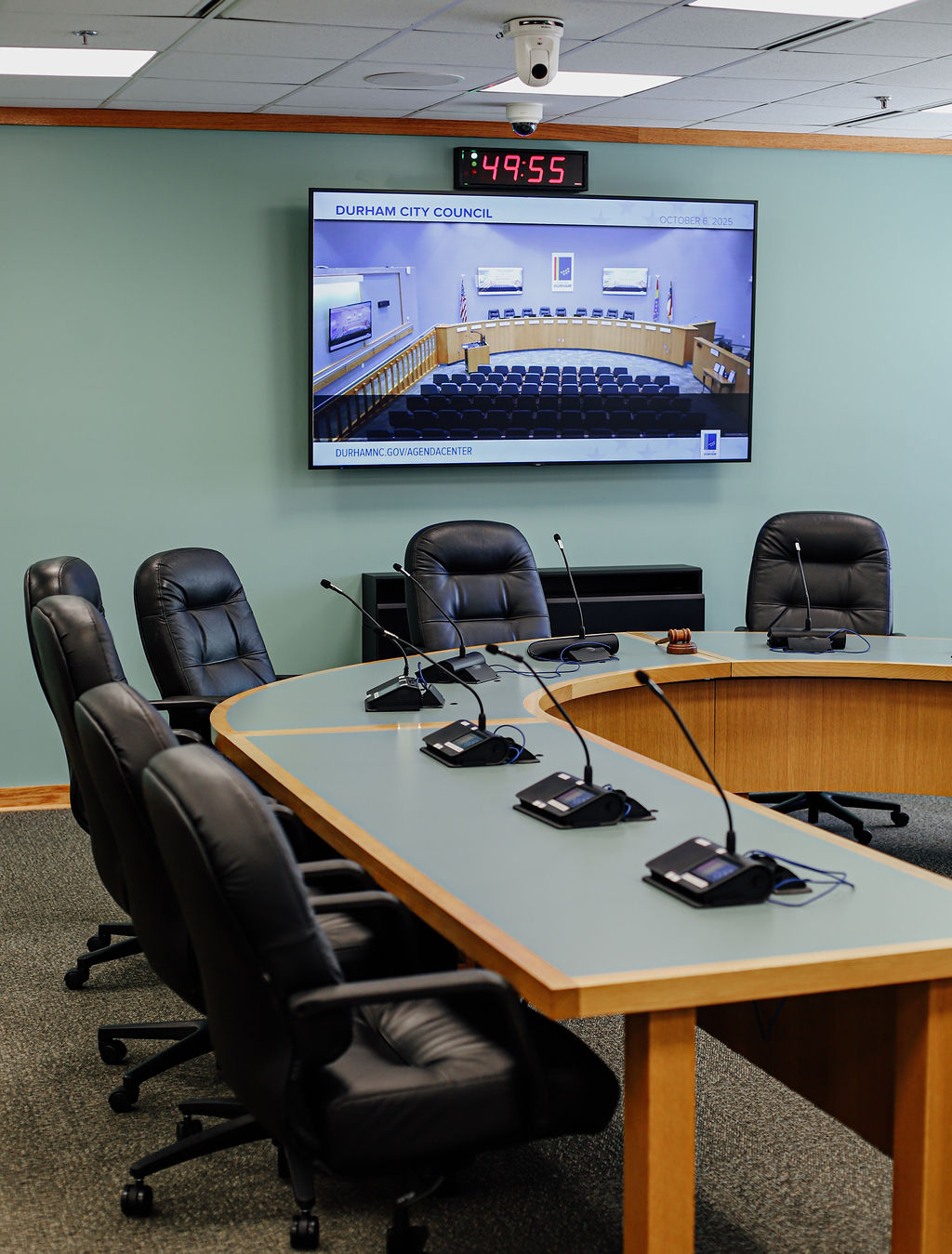
One of the most common traps in AV planning is trusting marketing materials to tell the whole story. A brochure might say a particular microphone array covers a 20-foot range or that an all-in-one bar will solve all your conferencing needs. In a perfect room, that might be true. The problem is that perfect rooms don’t exist.
Every space has surfaces that reflect sound, HVAC systems that introduce ambient noise, ceiling heights that affect microphone pickup, and materials that either absorb or amplify audio energy. Glass walls, marble countertops, open ceilings, hardwood floors — these design elements look stunning, but they create real acoustic challenges that no amount of off-the-shelf equipment can overcome without proper engineering.
There are actual equations that determine whether a voice lift system will work in a given room without feeding back. There are calculations for how much surface area needs acoustic treatment to bring reflections under control. There are noise floor measurements that determine whether your HVAC system is going to compete with the person speaking. None of this is guesswork, and none of it can be skipped.

What proper AV engineering actually evaluates:
Room dimensions, ceiling height, and surface materials
Ambient noise floor from HVAC and surrounding spaces
Acoustic reflection patterns and reverberation time
Microphone pickup patterns relative to speaker positions
Signal chain integrity from source to display
Network bandwidth and security requirements for unified communications
This is why a premium implementation partner doesn’t start with a product catalog. They start with your room, your use case, and the math.
Dynamic and customizable
Every industry has its own requirements
AV is not a one-size-fits-all proposition. The needs of a healthcare system are fundamentally different from those of a university, a corporate headquarters, or a government agency. Understanding those differences before a project begins is what separates a system people love from one they learn to work around.
01
Healthcare
Flexibility and standardization have to coexist. Physicians and clinical staff move between facilities, and they need to walk into any room and present without a learning curve. The challenge is designing systems that feel consistent across sites while still maintaining each facility’s individual branding and operational workflows.
02
Higher education
The shift toward hybrid and flexible learning has changed everything. Classrooms now need to serve in-person students, remote participants, and asynchronous viewers with equal quality. That means advanced microphone systems that capture a student’s question from the back row, automatic camera switching that follows the speaker, and streaming infrastructure that delivers a seamless experience regardless of where the learner is sitting.
03
Corporate
The primary constraint is often usability paired with security. Employees want the same effortless experience they have at home: walk in, connect wirelessly, start presenting. But enterprise networks have security requirements that make that kind of simplicity an engineering challenge, not a default. The best corporate AV systems feel effortless to the user because someone spent significant time making sure every convenience feature operates within the organization’s security framework.
04
Government and mission-critical
Reliability and longevity are paramount. Taxpayer-funded systems need to last, and mission-critical spaces like emergency operations centers need to run continuously with no room for unplanned downtime. That means commercial-grade hardware, battery backups on critical systems, and lifecycle planning that starts at installation and extends years into the future.
“The dream scenario for most leaders is walking into a room and having everything just work. That’s achievable — but it’s not simple.”
Beyond the Button
When technology disappears
Occupancy sensors detect you and power up the displays. The system routes to the correct input. One button joins the scheduled meeting. Audio levels are already calibrated. Cameras automatically switch to the active speaker.
This kind of automation is achievable, but behind that effortless experience is a layer of custom programming, hardware integration, and ongoing coordination between AV and IT systems. The choice of conferencing platform matters. Whether you need a room that runs Microsoft Teams, Zoom, Google Meet, or all three changes the hardware requirements, the network configuration, and the programming involved.
The right approach starts by understanding how your organization actually works: what platforms your teams use, what your external meeting patterns look like, and what the majority use case is that the system needs to be optimized for.
Timing Is Everything
Bring the right partner in early
The single most impactful thing a leader can do when planning an AV project is to bring in the right implementation partner at the earliest possible stage — ideally during programming and schematic design, before architectural decisions have been finalized.
This is not just about getting a quote. It’s about having a team at the table that understands the science, the technology, and the user experience well enough to catch problems before they become expensive to fix. Acoustic issues that are trivial to address during construction become major renovation projects after the fact. Platform decisions that are easy to make early become painful migrations later. Hardware choices that seem like cost savings today become replacement costs in two years.

When to involve your AV partner:
Programming phase — Define room types, use cases, and technology standards
Schematic design — Begin translating requirements from Programming phase into visual concepts and narratives.
Design development — Address acoustic requirements, infrastructure routing, and power needs
Construction Documents — Finalize equipment selections and integration points
Construction Administration — Coordinate installation with trades and verify infrastructure
Commissioning — Test, tune, and train users before handoff
The goal is to pay for it once, not twice. Organizations that invest in proper planning, commercial-grade equipment, and expert integration up front consistently get five to seven years of reliable service from their systems.
Those that chase the lowest bid or cut corners often find themselves replacing hardware, rewiring rooms, or simply abandoning spaces within 18 to 24 months.
Think Long Term
Invest once. Use it for years.
A premium AV partner doesn’t just install equipment. They listen to your vision — your dream — translate it into technical requirements, test it against the physics of your space, and build a system that works reliably from day one. They plan for the inevitable technology refresh years down the road. And they stand behind the work with ongoing support that keeps everything running.
Your space is an investment in how your organization communicates, collaborates, and operates. The question isn’t whether to invest in AV technology. It’s whether you invest once, with a partner who gets it right — or pay for it again and again.
Let’s build your dream AV project together.
Strategic, precise guidance to turn communication goals into systems that perform where it matters most.